
UK Aerospace and Defence: Titan of Global Industry
The UK aerospace and defence sector is not merely a part of the national economy; it is a foundational pillar of Britain’s high-tech industrial identity and a critical engine for global exports. From the historic engine plants of Derby to the advanced, automated wing-manufacturing facilities in Broughton, the United Kingdom remains an undisputed global powerhouse in an industry characterized by intense international competition, massive capital investments, and rapid, disruptive technological evolution.
For any UK business, but particularly for the more than 1,000 Small and Medium-Sized Enterprises (SMEs) that make up the vital, highly specialized supply chain, understanding the sheer scale, historical weight, and future trajectory of this sector is the first and most crucial step toward international success. The landscape is shifting rapidly due to geopolitical pressures, the push for sustainable aviation, and post-Brexit trade realities. To thrive, businesses must look beyond domestic borders and understand where the UK fits into the global aerospace puzzle.
A Statistical Powerhouse in UK Aerospace and Defence
To truly comprehend the magnitude of the UK aerospace and defence sector, one must look at the staggering economic data that underpins it. This is not a niche industry; it is a macroeconomic heavyweight.
According to data from ADS Group, the premier national trade association representing these industries, the aerospace sector alone contributes over £35 billion to the UK economy annually. When combined with the defence, security, and rapidly growing space sectors, the total turnover exceeds an astonishing £70 billion.
Furthermore, Office for National Statistics (ONS) data consistently shows that exports of "air and spacecraft and related machinery" generate tens of billions of pounds for the UK treasury, reaching nearly £39.7 billion in recent peak years. This highlights a crucial characteristic of the industry: it is overwhelmingly export-led. Approximately 90% of the UK’s civil aerospace production is destined for international markets.
Whether it is a Rolls-Royce Trent XWB engine powering a Qatar Airways Airbus A350, or advanced Leonardo radar systems deployed by NATO allies, "Made in Britain" carries an immense weight of prestige, quality assurance, and technical reliability that is second to none globally. The sector directly employs over 370,000 highly skilled workers across the country, while supporting hundreds of thousands more indirect jobs in logistics, raw materials, and professional services. It is an industry that drives high-wage, high-productivity employment in regions far beyond London and the South East.
The "Prime" Ecosystem: Giants of British Engineering
The global aerospace and defence landscape is organized in a strict hierarchy, dominated at the very top by "Primes," the global, multi-billion-pound systems integrators. The UK is unique in Europe for hosting a diverse array of these top-tier giants, which serve as the anchor for the entire domestic supply chain:
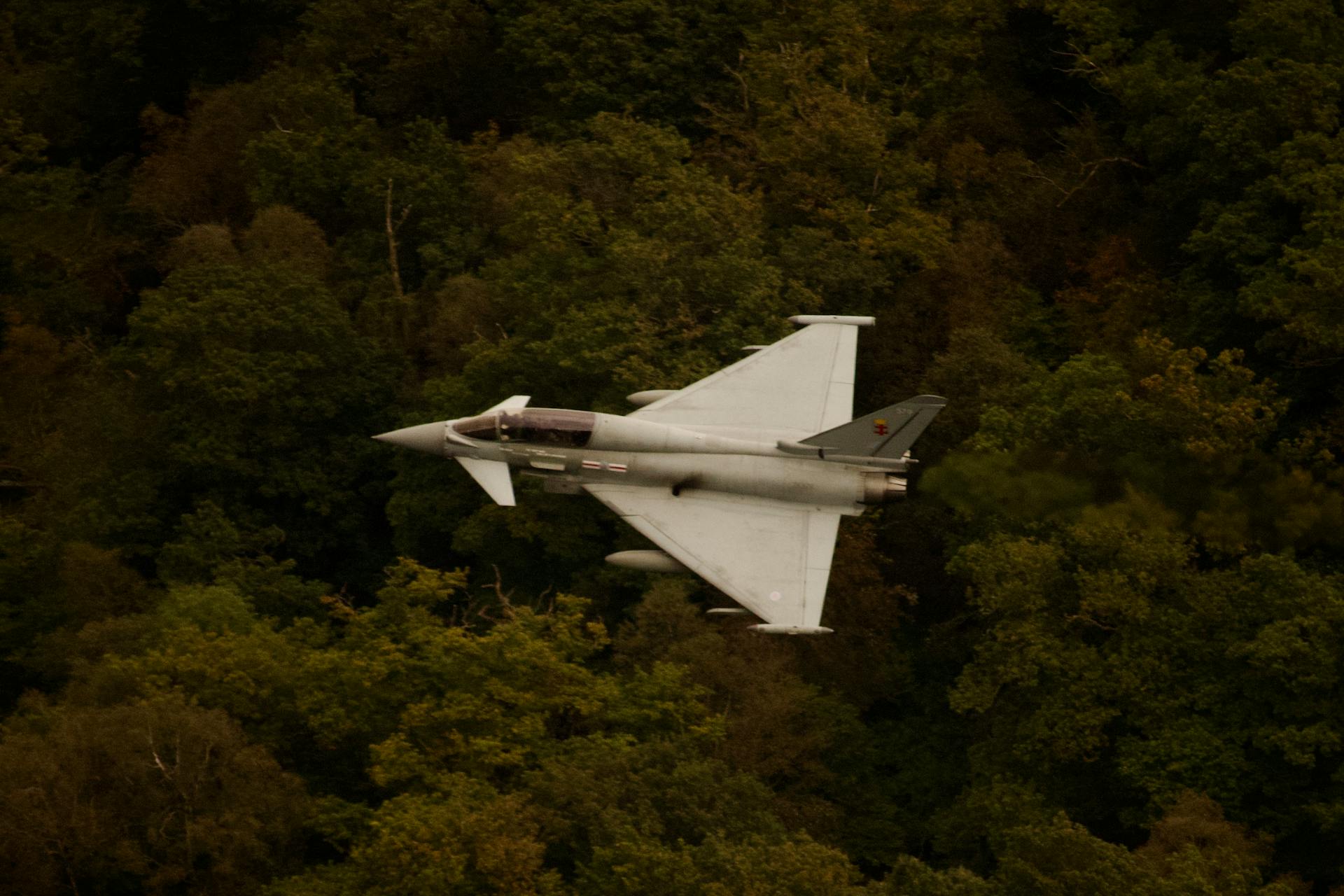
BAE Systems: As the UK’s largest defence contractor and a major global player, BAE Systems is a titan across air, land, sea, and cyber domains. They are a Tier 1 partner in the American F-35 Lightning II program (manufacturing the complex rear fuselage in Lancashire), a driving force behind the Eurofighter Typhoon, and the lead contractor for the Royal Navy’s Dreadnought-class nuclear submarines.
Rolls-Royce: Synonymous with engineering excellence, Rolls-Royce is a world leader in aero-engine technology. They hold a dominant market share in wide-body civil aviation with their Trent engine family. Furthermore, they provide the propulsion systems for the UK's nuclear submarine fleet and are heavily involved in military aviation and emerging small modular nuclear reactor (SMR) technology.
Airbus UK: While Airbus is a pan-European entity, its UK operations are absolutely critical to its success. The UK is the designated center of excellence for Airbus wing design and manufacturing. The massive facility in Broughton, North Wales, produces the wings for the entire Airbus commercial family (including the A320, A330, and A350), while the Filton site in Bristol handles advanced R&D and design.
Leonardo UK: A powerhouse in rotorcraft and defence electronics. From their facility in Yeovil, the "Home of British Helicopters," they produce the AW159 Wildcat and AW101 Merlin. Meanwhile, their Edinburgh facility is a global center of excellence for airborne radar and laser technology.
Other Key Players: The ecosystem also relies heavily on major multinational primes with massive UK footprints, including Thales UK, Babcock International (leading maritime support and shipbuilding), and GKN Aerospace (leaders in complex composite structures).
However, the true strength of the UK aerospace and defence sector lies in its depth. For every BAE Systems or Airbus, there are hundreds of nimble SMEs providing specialized precision-machined components, advanced composite materials, thermal management systems, and bespoke software. This rich, interconnected ecosystem is what makes the UK a genuine "One-Stop Shop" for global aerospace procurement.
Regional Clusters: The Geography of UK Aerospace
Unlike many industries clustered in the capital, the UK aerospace and defence sector is a true national endeavor, distributed across powerful regional hubs. Understanding these hubs is vital for supply chain integration:
The North West: Centered around Lancashire and Greater Manchester, this region is the heartland of UK combat air capability, dominated by BAE Systems’ sites at Warton and Samlesbury. Supported by the North West Aerospace Alliance (NWAA), it boasts one of the largest concentrations of aerospace production in Europe.
The South West: Bristol and the surrounding area represent a massive aerospace cluster, deeply rooted in the legacy of the Concorde. Today, it is home to Airbus in Filton, Rolls-Royce, GKN Aerospace, and a vibrant hub of aerospace startups supported by the West of England Aerospace Forum (WEAF).
The Midlands: Often described as the manufacturing engine room of the UK, the Midlands is anchored by Rolls-Royce in Derby. The Midlands Aerospace Alliance (MAA) supports an incredibly dense network of precision engineering SMEs that supply complex engine parts and hydro-mechanical systems globally.
Wales, Scotland, and Northern Ireland: Broughton in North Wales is synonymous with Airbus wings. Scotland has carved out a massive niche in the global space sector, manufacturing more small satellites than almost anywhere else in Europe, alongside significant defence electronics manufacturing. Northern Ireland, historically anchored by Shorts (now Spirit AeroSystems), remains a vital center for aerostructures.
Why the UK Leads in Global Exports
Several structural advantages contribute to the UK’s enduring success as a premier exporter in this space:
1. Relentless Innovation and R&D
The UK consistently punches far above its weight in aerospace R&D. Collaborative bodies like the Aerospace Technology Institute (ATI) coordinate billions of pounds in joint government and industry funding. This ensures that the UK remains at the absolute forefront of "Flight Plus," the critical transition toward sustainable, zero-carbon aviation. Projects developing hydrogen fuel cells, sustainable aviation fuels (SAF), and ultra-efficient next-generation engine architectures (like the Rolls-Royce UltraFan) guarantee the UK will have the products the world wants to buy in 2040 and beyond.
2. A Deep, Specialized Skills Base
With world-class academic institutions like Cranfield University and Imperial College London, alongside a long, proud tradition of engineering apprenticeships, the UK provides the human capital necessary to solve the most complex aerospace challenges. While STEM skills shortages remain a challenge, industry-led training programs are aggressively upskilling the next generation.
3. Geopolitical and Strategic Alliances
As a leading member of NATO (consistently meeting the 2% GDP defence spending target), a permanent member of the UN Security Council, and a core member of the "Five Eyes" intelligence alliance, the UK enjoys deep-rooted, trusted defence relationships. These alliances form a bedrock of trust that facilitates high-level, sensitive export opportunities to allied nations.
4. Robust Institutional Support
The UK government actively supports global connectivity. Through UK Export Finance (UKEF), businesses can access world-class export credit guarantees, ensuring that no viable export deal fails due to a lack of private financing.
The Post-Brexit Landscape and New Horizons
The UK's departure from the European Union undeniably introduced new administrative hurdles. The end of seamless, frictionless trade required the industry to adapt to new customs procedures, origin checks, and parallel regulatory regimes (like UK REACH for chemicals).
However, the fundamental strengths of the UK aerospace and defence sector remain completely intact. The Trade and Cooperation Agreement (TCA) largely protected tariff-free trade for qualifying goods. The UK continues to be an irreplaceable core partner in massive European projects like the Eurofighter Typhoon and the integrated Airbus supply chain.
More importantly, post-Brexit Britain has aggressively pivoted to look further afield, forging generational security and technology partnerships that will drive export revenues for the next fifty years:
AUKUS: This trilateral security pact between Australia, the UK, and the US is a watershed moment. While Pillar 1 focuses on delivering nuclear-powered submarines to Australia, Pillar 2 focuses on advanced capabilities (AI, quantum computing, hypersonics). This opens a massive, unprecedented export corridor for high-tech UK firms into the Indo-Pacific.
The Global Combat Air Programme (GCAP): Merging the UK's "Tempest" future fighter program with Japan's F-X program, and bringing in Italy, GCAP is an ambitious endeavor to build a sixth-generation stealth fighter by 2035. This project will sustain the UK's combat air industrial base and generate immense collaborative export opportunities for the SMEs involved.
The Immense Opportunity for SMEs
For a mid-sized firm or an SME, the export market isn't just an "extra" revenue stream—it is often the primary driver of survival and growth. Domestic demand alone simply cannot sustain the high R&D and capital costs associated with aerospace component manufacturing. To thrive, UK firms must look to the global stage.
Opportunities abound for companies that excel in niche disciplines: complex 5-axis machining, advanced composite layups, cybersecurity for avionic systems, and additive manufacturing (3D printing). Initiatives like the SC21 (Supply Chains for the 21st Century) program exist specifically to help these SMEs achieve the world-class quality and delivery standards demanded by international buyers.
As we will explore deeply in this blog series, exporting in the UK aerospace and defence sector requires much more than just a great product. It requires a highly sophisticated understanding of volatile international markets, a rigorous, uncompromising approach to export compliance and dual-use technology, and a strategic utilization of government support and trade finance.